





RNIB and South Tyneside and Sunderland NHS Foundation Trust launch new support centre for people with sight conditions
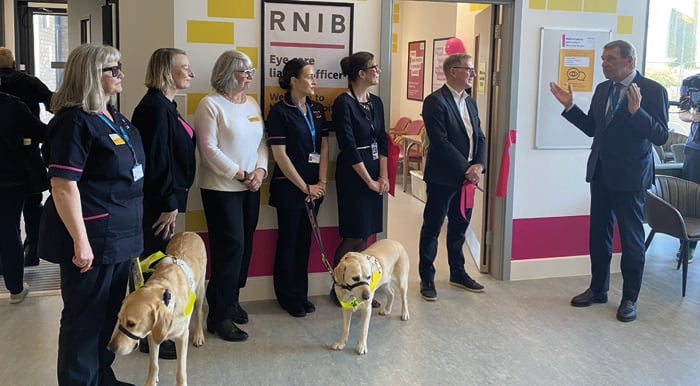
Staff from RNIB and South Tyneside and Sunderland NHS Foundation Trust at the official launch of the new ECLO room
People with sight conditions visiting the new Sunderland Specialist Eye Hospital, will be able to get vital emotional support and practical advice in a purpose-built centre, officially opening this week.
The brightly decorated suite sits right near the hospital entrance where it can be easily found by patients. It’s home to two Eye Care Liaison Officers (ECLOs), employed by the Royal National Institute of Blind People (RNIB) to offer support to patients with sight conditions; helping them understand their diagnosis and find emotional support at what can be a life-changing time.
'A superb new centre'
Simon Antrobus, RNIB’s Chief Executive, said: “For many people the experience of sight loss creates significant anxiety, uncertainty and can result in a loss of confidence about the future. That’s why we’re so delighted to have a superb new centre to house our fantastic ECLOs, who can be there for patients when they need them most. We now have ECLOs in every major NHS eye clinic in the UK and we want Sunderland to be the flagship for the service, our hope is that other NHS Trusts will follow.”
'Patients don't have to feel they're on their own'
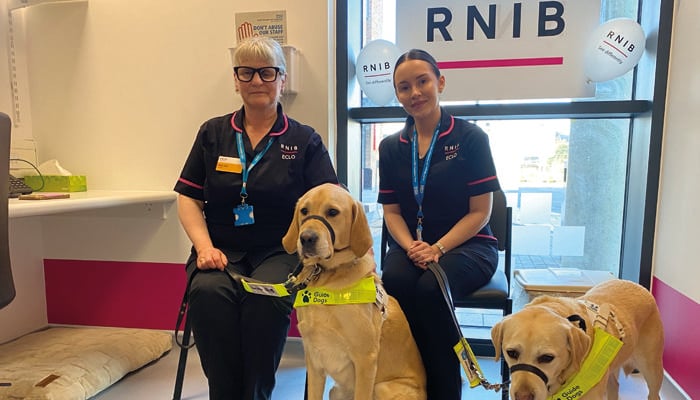
'Support is easy to fin' o Hewitson, are both registered severely sight impaired, so understand what it means to go through sight loss and move forward.
Mary said: “A diagnosis can be incredibly difficult. Patients can come to us and process the news they’ve been given and don’t have to feel they’re on their own.
Having a patient come to us and afterwards say, ‘thank you so much, I think I’m going to be OK’, means so much.”
Jackie Kent has Stargardt’s dystrophy, which means she has about four per cent vision. She’s been a patient at Sunderland, an ECLO, and now provides clinical supervision to the RNIB ECLO service across the UK.
'There was somebody who understood'
She said: “Before I saw an ECLO, I didn’t know what help was available. I was just trying to manage and get on with things, but suddenly there was somebody there who understood, who could listen, and who could start opening doors for me.”
The ECLO Jackie visited referred her to a local college with a specialist vision impairment IT unit, helped connect her with local sensory support and supported her with a benefits application.
Jackie said: “The impact was profound; I got a place at the college, I got accepted for a guide dog. My world just opened up completely. It changed everything - my confidence, my independence, my future.”
'Support is easy to find'
Carol Jobling, Matron for Ophthalmology at South Tyneside and Sunderland NHS Foundation Trust, said:
“The ECLO service makes a real difference to our patients. Alongside the clinical care we provide, patients have dedicated support to help them understand their diagnosis, talk through their concerns and find the practical help they need. Having this purpose-built space in our new hospital means that support is easy to find and there when patients need it.”
RNIB worked closely with South Tyneside and Sunderland NHS Foundation Trust as part of the project group, assisting in design of signage and way finding. Feddback from blind and partially sighted people helped shape the building’s layout, signage, visibility and lighting, making it as accessible as possible for all patients.
For more information about RNIB’s ECLO service visit