



2025 review: Our campaign highlights
This year, we’ve made real progress in championing the rights of blind and partially sighted people. From transport and health to voting and social care, we’ve responded to government proposals and set out our own vision for an accessible, inclusive future.
Together, we:
- Stopped major cuts to disability benefits, protecting thousands of people’s independence.
- Helped secure and spread the word about the updated NHS England Accessible Information Standard, which is essential for more people to get health information they can read and understand.
- Pressed for urgent action on vision rehabilitation, with 90 MPs, peers or their staff turning up to learn more at our parliamentary event.
- Influenced transport policy by tackling barriers on buses and our streets.
- Championed accessible voting as part of our ongoing work to make sure everyone can vote confidently and in secret.
Read more below to see how you helped us achieved these results.
Building our evidence base
In February, 1,200 people with sight loss took part in our Big Travel Survey, sharing everyday experiences of bus, train, and walking journeys. Your insights shaped our ‘All aboard?’ report and our ‘In My Way’ street safety report, and they’ll inform a follow‑up on train travel in early 2026. You can read the reports here.
Our evidence helped us highlight the urgent need to pause the creation of bus stop bypasses as part of the Bus Services Act 2025. Working with the Department for Transport, and briefing MPs and Lords, we showed exactly how these designs disadvantage blind and partially sighted passengers. The Department is set to publish initial guidance by January 2026, which we hope will recognise how unacceptable these designs are.
People power
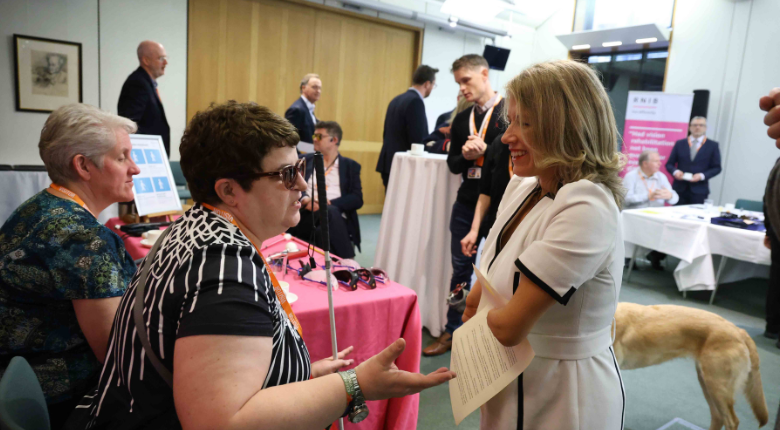
Change happens when people act together. This year 2,800 of you wrote to your MPs to ahead of key votes, to ask them to protect Personal Independence Payments (PIP). Persistent campaigning by thousands of you, alongside our allies across the disability sector, forced the UK Government to drop plans to tighten PIP eligibility. While changes to Universal Credit for new applicants from April 2026 did pass, we’re continuing to press for a fairer benefits system, faster support from Access to Work, and action to make sure far more blind and partially sighted people can enter or stay in employment.
Ensuring blind and partially sighted people have timely access to vision rehabilitation services across England continues to be our main campaign. Our petition has now reached over 36,000 signatures, and in November, we brought the message to Parliament. Thanks to over 4,600 supporters contacting their MPs, we were able to reach 99 per cent of Parliamentarians with over 90 MPs and peers attending our event to learn how these services help people to stay independent and why the Health and Care Secretary, Wes Streeting, needs to act to end the delays in accessing them.
Locally, our Area Campaigns Officers worked alongside volunteers and supporters across England. We walked the streets with South Yorkshire Mayor Oliver Coppard and his transport and active travel team to show why accessible infrastructure matters. In Liverpool City Region, Mayor Steve Rotheram joined us for a guided Merseyrail journey to experience accessibility features first‑hand and discuss the remaining challenges. These moments turned lived experience into action.
Working in partnership
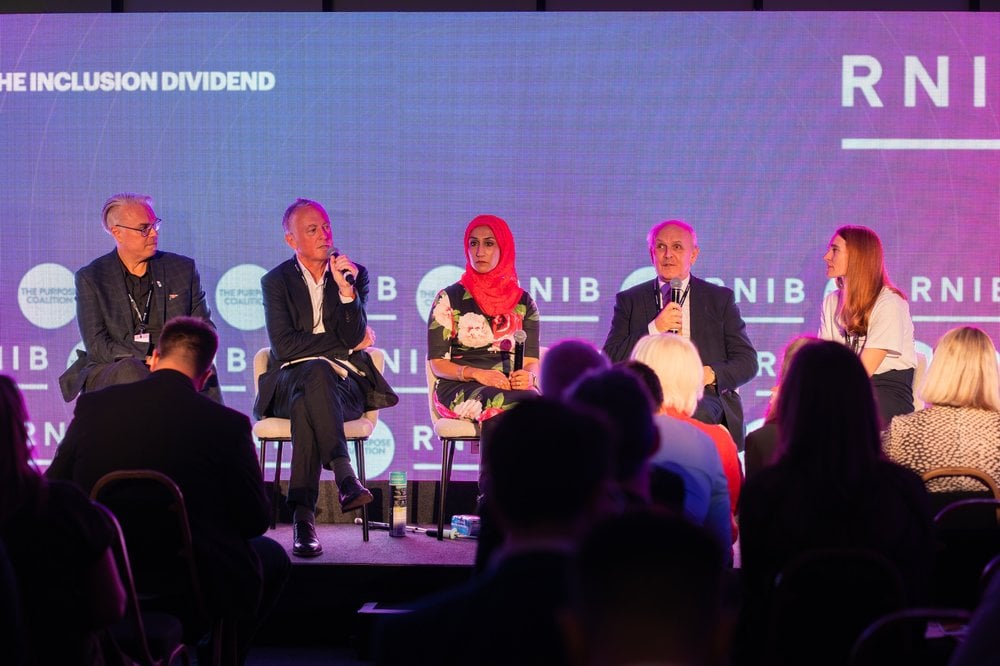
Over the year we’ve worked alongside charities, organisations, and businesses to put the rights of blind and partially sighted people front and centre. At the Labour Party Conference, our fringe event, chaired by Vidar Hjardeng MBE, brought leaders from Procter & Gamble, ITV, and Google to share how building accessibility in from the start drives innovation and better products for everyone. At the Liberal Democrat Conference in Bournemouth, we took part in a Voluntary Organisations Disability Group (VODG) roundtable on adult social care, championing timely, accessible, and integrated care pathways.
We contributed to the ‘Safety Gap’ report from the Patient Safety Commissioner, exposing ongoing risks in medicines and devices for people with sensory impairments like sight loss, particularly those managing conditions like diabetes, because accessible design for packaging and instructions is still too often an afterthought.
Beyond Westminster, we worked with Transport for London (TfL), Tees Valley and South Yorkshire Combined Authorities to shape streets and highways policy. TfL has now halted the installation of colourful crossings on its roads and removed existing ones, following the concerns we expressed and research we supported – an important step towards safer, less confusing crossings.
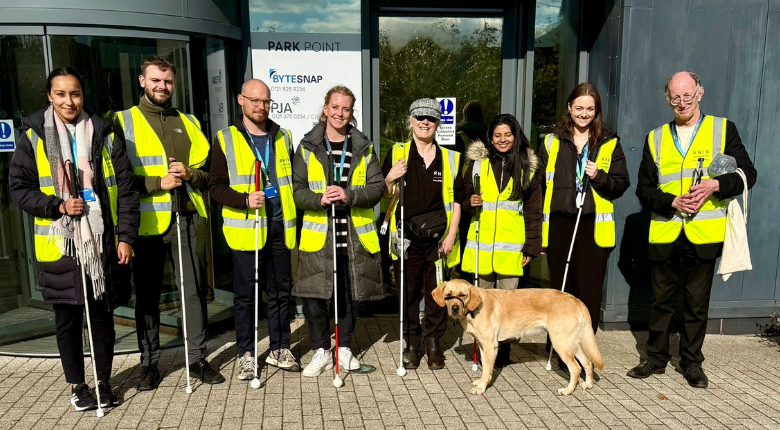
We’ve also been engaging with street design consultants, engineers and students, running guided walks and sessions with firms like PJA and Mott MacDonald, the Institution of Civil Engineers, and Urban Design students at Liverpool University, so tomorrow’s designs are accessible by default.
Collaboration
This year we released important new research on setting out six cost effective steps that could improve eye care services across England, and soon after we saw the Government release the long awaited NHS 10-year plan. We welcomed its focus on tackling ophthalmology waiting lists, as well as preventing ill health, and bringing care closer to communities. With a strong emphasis by Government on the NHS App, we’re working hard to make sure this is accessible but that the needs of people who are digitally excluded are not overlooked.
In Parliament, we backed Julie Minns MP’s Elections (Accessibility for Blind Voters) Bill to promote accessible voting devices. While this did not proceed, it was an important tool for making a powerful case for change to MPs and Ministers. We were also busy running workshops with councils and local societies; helping people try devices, share experiences, and request the reasonable adjustments needed to vote independently and in secret.
Looking ahead to 2026
Our campaigning continues for accessible transport, timely vision rehabilitation, a fairer benefits system, and employment support. With the Government set to make changes to voting, reforms expected on Special Educational Needs and Disability, and new proposals due to be presented on PIP, we’ll need as many supporters as possible to join us in making change happen.