




Finding rhythm through volunteering – Mark’s volunteer story
Mark is a Volunteer Talk and Support Musician Telephone Group Facilitator who started volunteering with RNIB because he wanted to do something practical and people-focused—and ended up finding something bigger. From running a group to stepping in across sessions (and even adding a quiz), he’s built a weekly rhythm of connection.
How Mark got started
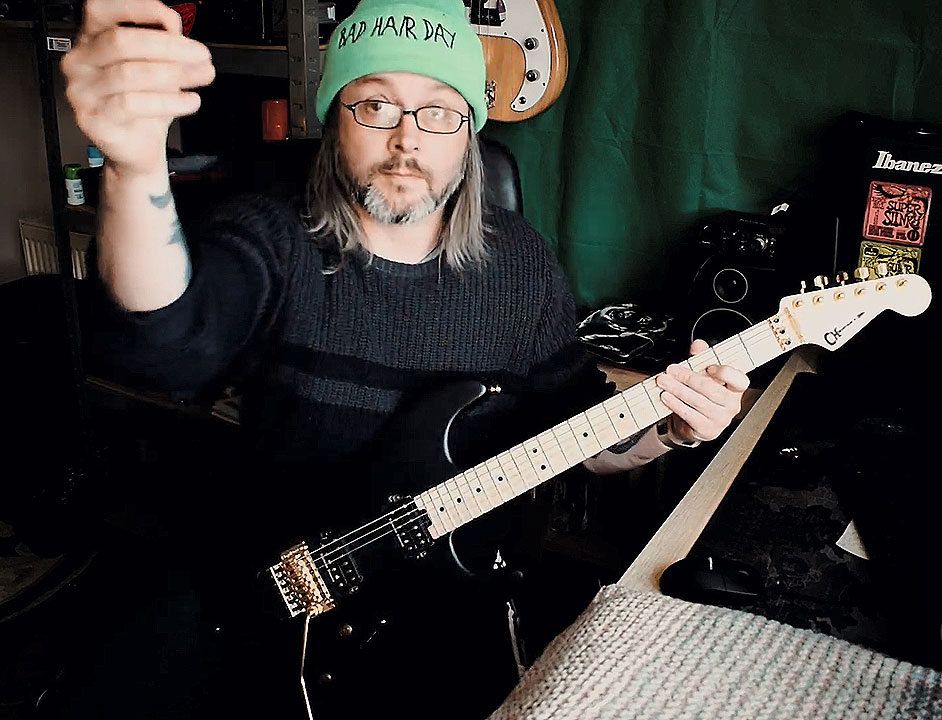
“I was looking for a job which was music related because I like music,” he says. Mark plays guitar so when he spotted a music-focused volunteer role with RNIB, he took a chance. “I didn’t think I’d hear back really, but I did and that was good.”
From one group to many
After training, Mark began covering other groups too. “I ended up doing some covering so I’ve got some experience after the training,” he explains. And while music was the original spark, the reason he stayed quickly became bigger than that: “It’s nice to feel useful as well.”
“If I’ve got anything to offer then that’s great,” Mark says. “And if I’m helping other people then lovely jubbly as well.”
Over the year, Mark’s confidence—and his understanding—grew. “I didn’t know much about sight loss before,” he says, “but I know a lot more about it now.” And the best part? The people. “I’ve met some lovely people along the way.”
What started as one role soon became several regular sessions. The music group “kicked off,” and Mark found himself building real rhythm and routine with the same members week to week.
Creating new groups (and a quiz)
One of Mark’s groups got on so well that members wanted to meet more than once a week. “They got on very well and they wanted to meet up a couple of times a week, so I said, well I’d be quite happy to start another one up.” A Tuesday afternoon group was born—and Mark also makes sure he can step in to cover when needed.
Then came another idea from the group: a quiz. “Somebody suggested a quiz group, I like quizzes as well, so that’s good fun,” Mark laughs. “I also facilitate a monthly quiz group.”
What a session feels like
No two calls are the same. “With different groups, there is different dynamics,” Mark says. But in the groups he facilitates regularly, the magic is often in the way one small topic turns into a whole-room chat. “Once a topic starts, there is a chain reaction of conversation and everybody seems to have a laugh too which is a good thing, along with more serious discussion.”. And whatever the subject, the tone matters: “Everybody has a laugh, which is good.”
The harder moments—and why he stays
Facilitating isn’t just about keeping conversation going—it’s about noticing who might be getting missed. Sometimes the calls can be emotional. Sometimes things can get a little bit intense", Mark says. He is aware "some people may have difficulty coming to terms with their condition" and admits "of course there is a concern and wishes one could wave a magic wand’. When someone is in distress, Mark follows RNIB processes and makes sure the right support is involved—while still being human in the moment.
His message to anyone thinking about volunteering
Mark has noticed just how many ways there are to get involved. “I also realise there are so many volunteers doing different things’ he says.
And if someone asked whether they should volunteer, his answer is straightforward: “Go for it. You’re helping other people, but you’re also sort of helping yourself as well. So you are doing good for your own soul as well as benefiting other people’.
The moments that stay with him
Ask Mark about highlights, and he doesn’t point to one big moment—he talks about a feeling. ‘It is great when a group is flowing with conversation, enthusiastic about various topics, general interaction and enjoying themselves’.
For Mark, that’s what volunteering looks like in real life: turning up, making space for people, and building something steady—one chat, one laugh, one shared story at a time.