




Martial arts mum fights for inclusive employment
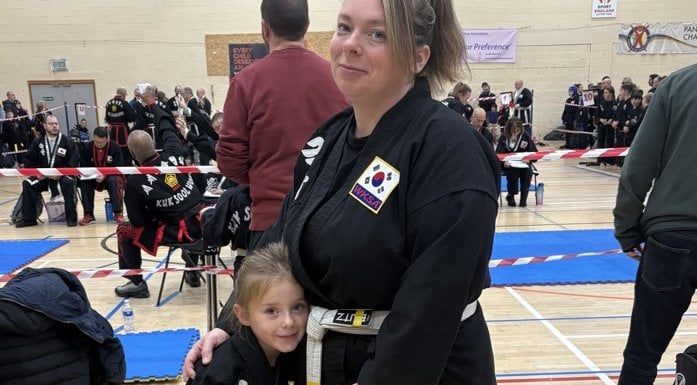
Amanda and her daughter stand together smiling, both wearing martial arts uniforms.
A visually impaired mum in West Lothian is calling for more accessible and inclusive employment for people with sight loss.
Amanda Whitfield recently won medals alongside her five-year-old daughter in mixed martial arts, after taking part in family classes together. With her daughter now at school, Amanda has been looking to re-enter the workforce and highlight the need for fair opportunities for blind and partially sighted people.
“I was diagnosed with Stargardt disease back in 2016, when I was 26,” she says. “But I started noticing it more when I was on maternity leave with my daughter. I want to work, though. I’ve kept proactive with doing martial arts with her, and volunteering, but there hasn’t been an employer willing to take me on once I’ve told them I have low vision.”
National sight loss charity RNIB has been supporting Amanda with guidance and advice as she seeks work. The charity is calling on employers to review their recruitment processes and websites for accessibility, and to engage directly with blind and partially sighted candidates rather than making assumptions about their abilities.
“On paper my experience is strong,” Amanda says. “But when I get to interviews and let them know I have a visual impairment, suddenly I don’t hear back. I don’t want to hide it, because there are simple things they can do to make a role accessible. It starts by talking to me, and asking what I need, not by assuming I won’t be able to do the job.”
Amanda has recently completed barista training and a short-term paid work placement in a coffee shop. Designed to give blind and partially sighted jobseekers practical experience, the training and placement provided valuable hands-on skills and workplace confidence.
Amanda says, “The training was really good. I don’t need many adaptations, but you’ve got to be aware of safety, like the coffee running through the machine quickly. The wee screen that tells you is hard to see, but I’ve started to recognise it, and our trainer was phenomenal, with amazing understanding and patience.”
Inaccessible transport can also be a barrier to employment. Amanda explains: “Getting around on public transport can be disorientating, especially on darker winter days. When you’ve got a little one too, you feel even more vulnerable. Employers just need to understand that sometimes extra understanding and flexibility can make a big difference.”
Despite the challenges, Amanda remains determined: “I genuinely think there's a job out there for everybody. Blind and partially sighted people just need to be given the chance.”
With 183,000 people living with sight loss in Scotland, and only one in four of working age in employment, RNIB Scotland is urging employers to act.
James Adams, Director of RNIB Scotland adds,
“Stories like Amanda’s highlight a desire to work, but a lack of employer understanding. We can help employers ensure their recruitment processes are accessible, understand workplace adjustments, and engage with blind and partially sighted candidates fairly. These steps can make a real difference to blind and partially sighted people like Amanda.”

