




The importance of support workers
Support workers funded through Access to Work are not a luxury – they're essential for enabling people with sight loss to work effectively and safely.
They don't replace the role of the employee; instead, they remove barriers that inaccessible technology and environments create. Without this support, many of us would be forced out of work, despite being fully qualified and capable of doing our jobs.
A day in the life of a support worker
No two days are ever the same. In this video, Beccy shares what her days look like supporting Terri, who has sight loss – from early‑morning travel and guided walks to desk‑based work like managing calendars, fixing tech issues, and preparing presentations. Whatever the day brings, Beccy’s role is about removing barriers so Terri can focus on doing her work.
What support workers do
Support workers help people with sight loss succeed across every sector – from healthcare to broadcasting. They don’t replace the person doing the job; they remove the barriers that get in the way. With the right support at work, access replaces limitation.
Here, professionals share real‑life experiences of how support workers make that possible.
Alba, Eye Care Liaison Officer in the NHS
Alba is an Eye Care Liaison Officer (ECLO) working in a hospital setting, where she provides information, emotional support and advice to people with sight loss.
She uses a support worker to convert patient notes into accessible formats, navigate hospital corridors, and support patients who need physical assistance, including wheelchair users and those requiring sighted guiding.
"Without her, I couldn’t do this job. I’m very well qualified to do this job, but without support, I couldn’t do it. She’s not doing my job—she’s allowing me to do my job." - Alba

Alba with a patient at work
Hubert, Radio Content Producer for RNIB Connect Radio
Hubert is a radio producer and editor who also conducts on‑location interviews.
Severely sight impaired, he uses a support worker to navigate crowded events, position microphones, and access software used for editing and live programming.
“When I started my job, I didn't have a support worker for a few months and there was quite a few things that I wasn't able to do. I wasn't able to put my own music shows together due to the software we have being not fully accessible.” - Hubert
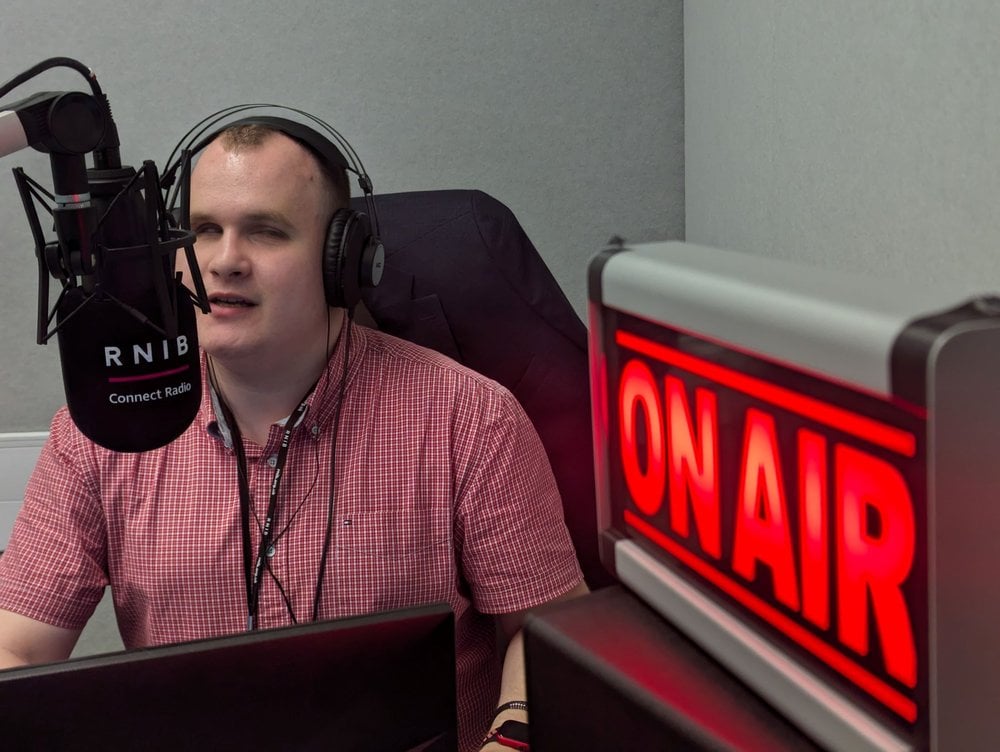
Hubert speaking on air
Lily, theatre and choir practitioner
Lily, whose name we’ve changed to protect her identity, works in theatre and education, frequently in low‑light or outdoor settings.
Severely sight impaired, she uses a support worker to act as a sighted guide, support safe working with children, enlarge documents, and produce accessible sheet music.
“It's so important for children to have disabled teachers and disabled leaders in their lives. The first time they meet me; I talk to them about my cane and show them how I see... They can ask questions, and we talk about it. I wouldn't be able to do that without a support worker.” - Lily
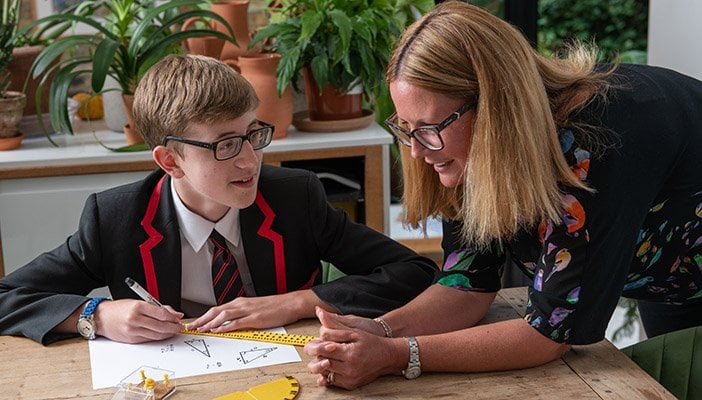
A teacher and a student leaning over a desk
Allan, Senior Content Producer at RNIB Connect Radio
Allan is a radio producer and presenter who also line manages staff and volunteers and works with complex digital systems. His support worker helps with monitoring screens, editing audio, and guiding Allan during outside broadcasts.
“If Access to Work can't provide what people need, you are going to have more people with disabilities out of work, not through choice.” - Allan
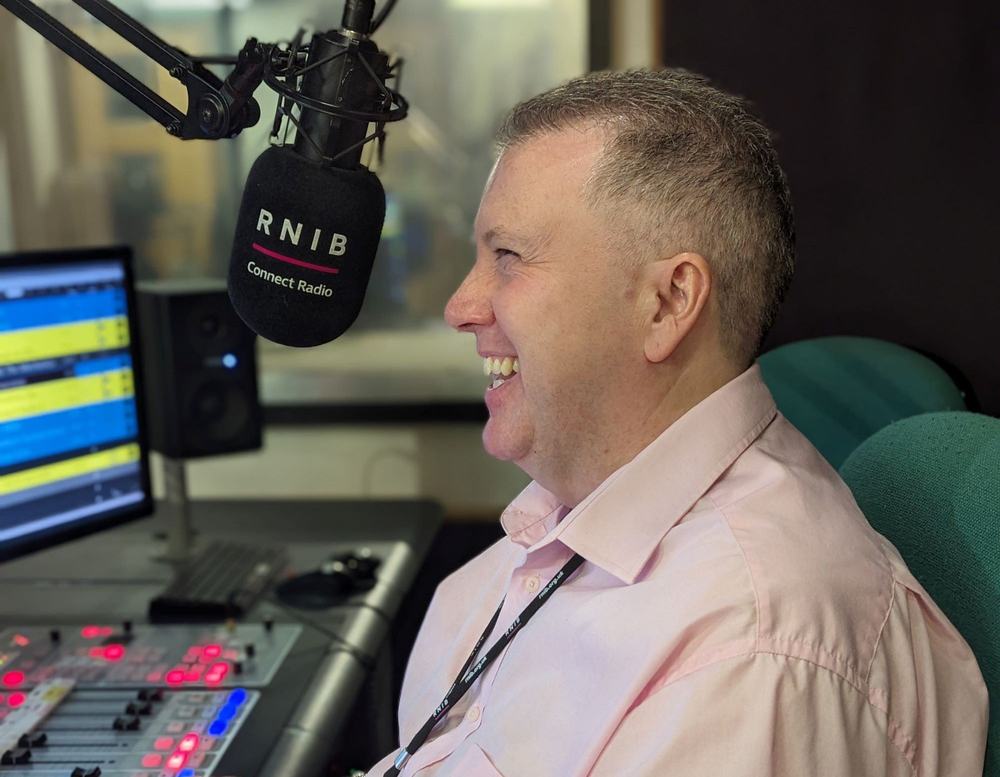
Allan in the Connect Radio studio
Khadija, Policy Lead for Accessibility at RNIB
Khadija leads complex policy work, including analysing reports, shaping organisational positions, engaging with stakeholders, and travelling regularly for events.
Severely sight impaired, she uses a support worker to access inaccessible documents and systems, navigate unfamiliar environments safely, manage professional communication, and participate fully in meetings both online and in person.
“From the point that I leave my house I am putting myself at risk… if I didn’t have somebody travelling with me, I couldn’t do it.” - Khadija

Khadija underneath a tree on a sunny day
Cindy, Social Worker
Cindy is a full-time social worker specialising in safeguarding adults with disabilities. She has no sight due to retinitis pigmentosa and relies on Access to Work support, including assistive technology and a support worker. This enables her to carry out inspections, analyse documentation, and support vulnerable adults through safeguarding processes.
“Without Access to Work I would not be able to work. I find my job extremely rewarding and am extremely good at it... For me to be stuck at home, not being able to work would severely impact my mental health because I need my brain to be active.” - Cindy
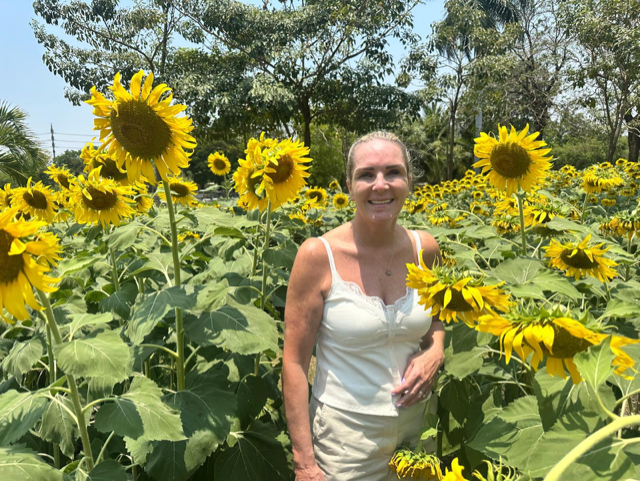
Cindy in a sunflower field
If support is removed
Without Access to Work-funded support workers, professionals like Allan, Lily, Alba, Khadija and Hubert could lose their jobs, reducing diversity in the workforce and increasing dependency on benefits.
As Hubert says, “It's hard for us to get a job, so we worry about keeping our jobs. If it's harder for us to get support, that worry not only doubles, but triples.”
Support workers make it possible for more people with sight loss to work. And when teams include individuals with sight loss, they gain unique perspectives shaped by different ways of navigating and accessing the world. These insights can spark creative problem-solving and lead to more inclusive, innovative solutions that benefit everyone. They also help to break down misconceptions about sight loss, creating a more inclusive workplace and, ultimately, society.